What does an HOA reserve study cost?
Most reserve studies fall between a few thousand and roughly ten thousand dollars, driven mainly by service level, unit count, and how many distinct components the property has. A full Level I study with a site visit costs the most, an update with a visit less, and a remote update least. The ranges below are estimates, not quotes: your actual price comes from a proposal, which takes five fields and one business hour.
What we charge
Prices depend on three things: which service level you need, how many units the association has, and how many distinct components the property carries. A 48 unit townhome community with a pool and a clubhouse is more work than a 48 unit community with a parking lot and a fence, and the price should reflect that rather than pretending otherwise.
If you are not sure which level applies, what each service level includes sets them side by side. If the question is more basic than that, what a reserve study is starts from the beginning.
| Service level | Typical range | What drives it |
|---|---|---|
| Level III: Rapid Remote Study No site visit. Built from your prior study, your photographs, and current cost data. | $1,500 to $2,000 | Component count and the quality of the prior study |
| Level II: Hybrid Verification Site visit to verify conditions against an existing study, then a rebuilt funding plan. | $2,500 | Flat for most properties; complex sites quoted individually |
| Level I: Full Study Complete component inventory built from scratch, measured and photographed on site. | $3,500 to $8,000 | Unit count, structure count, and how many distinct components the property carries |
| Transition study Declarant handover: condition assessment of what is being conveyed, plus the reserve analysis. | From $5,500 | Custom quoted. Scope depends on what was built and what records exist |
These are estimates, not quotes. They tell you the range your property is likely to land in before you call. Your actual price comes from a proposal, and that proposal is fixed fee: one number, which does not move unless the scope changes.
What would yours be?
Every figure above is an estimate. None of them is your price, because your price depends on what your property actually carries: how many buildings, which amenities, whether there is a prior study worth building from. Your proposal replaces the estimate with one fixed fee, and getting it takes five fields: the association name, roughly how many units, and where to reach you. We pull the public records ourselves.
An analyst comes back within one business hour during business hours, with a real number rather than a discovery call.
High rise and mixed use properties are quoted individually. Elevators, boilers, facade systems, and structured parking add components and inspection complexity that a per-unit range does not describe honestly.
What moves the number
Up
- Multiple separate buildings, which multiplies roof, siding, and mechanical inventory
- Amenities: pools, spas, clubhouses, sport courts, playgrounds, and their equipment
- Elevators, boilers, chillers, or other major mechanical systems
- No prior study, or a prior study too old or too thin to build from
- Travel to your region, quoted separately and visibly
Down
- A recent, well-documented prior study we can verify against rather than rebuild
- A simple site: paving, fencing, lighting, and little else
- Choosing an update level when a full study is not warranted
- A site visit that fits an already scheduled trip in your area
What a reserve study costs for a condo association
A condo association usually lands higher in the ladder than a single-family HOA of the same unit count, and the reason is structural rather than a pricing policy. The association owns more: roof, envelope, elevators, corridors and mechanical systems are commonly reserve components in a condo and commonly are not in a townhome or single-family HOA. More components means a longer inventory, more measurement on site, and more cost lines to research. Our pricing follows unit count and component count, so the difference shows up honestly rather than as a surcharge for the word "condo".
Buildings above three stories add elevated-access work and buildings above eight add high-rise access, both of which are priced as named adjustments rather than folded invisibly into a quote.
What a homeowners association reserve study costs, by size
| Association size | Level I: Full Study |
|---|---|
| up to 50 units | $3,500 |
| 51 to 100 units | $4,500 |
| 101 to 200 units | $5,500 |
| 201 to 300 units | $6,500 |
| 301 or more units | $8,000 |
For a full study, unit count is the largest single driver and the ladder above shows exactly where the steps fall: fifty units, one hundred, two hundred, three hundred, and above. The steps are real work rather than round numbers, because a larger association has more of everything to inventory. An update with a site visit is flat for most properties regardless of size, since the inventory already exists and is being verified rather than built.
What the price includes
A reserve study is only as good as the inventory under it and the costs attached to that inventory. Two studies of the same property can differ by a factor of two because one inventoried forty components and the other twelve, and nothing on an invoice tells you which one you bought. Here is what ours carries.
- Everything is photographed. Each component we inventory is documented with dated images at the time of the site visit, and those images stay attached to the component in your study. When a board three years from now asks why the roof was rated the way it was, the answer is a photograph rather than a recollection.
- Roofs are assessed from above. Drone and ground capture. Roofs, upper envelope and large site areas are photographed from above rather than estimated from the parking lot, and everything reachable on foot is measured and photographed where it stands. A roof seen from the ground is an assumption; a roof seen from above is an observation.
- A component library built for this work. Over six hundred component types with their own service lives, priced against hundreds of cost sources rather than a single national average. Installed costs vary by region and by component, and a study that applies one flat figure to roofing, paving, and painting alike is wrong in several directions at once.
- Our own analysis engine. The funding plan, the component schedule, and the cost escalation are computed rather than carried forward from a spreadsheet. That is why the turnaround is what it is: the speed comes from the tooling, not from doing less of the work.
This is the part that decides whether a board gets surprised. A special assessment is what happens when a cost arrives that nobody planned for, and the usual reason nobody planned for it is that nobody looked. A component that was never inventoried was never funded; a roof rated from the ground is rated on an assumption; a cost pulled from a national average is right for somewhere else. None of those produce an error anybody can see at the time. They produce a bill several years later, and by then the study that caused it is long since filed and paid for.
See a finished study if you would rather read the output than a description of it.
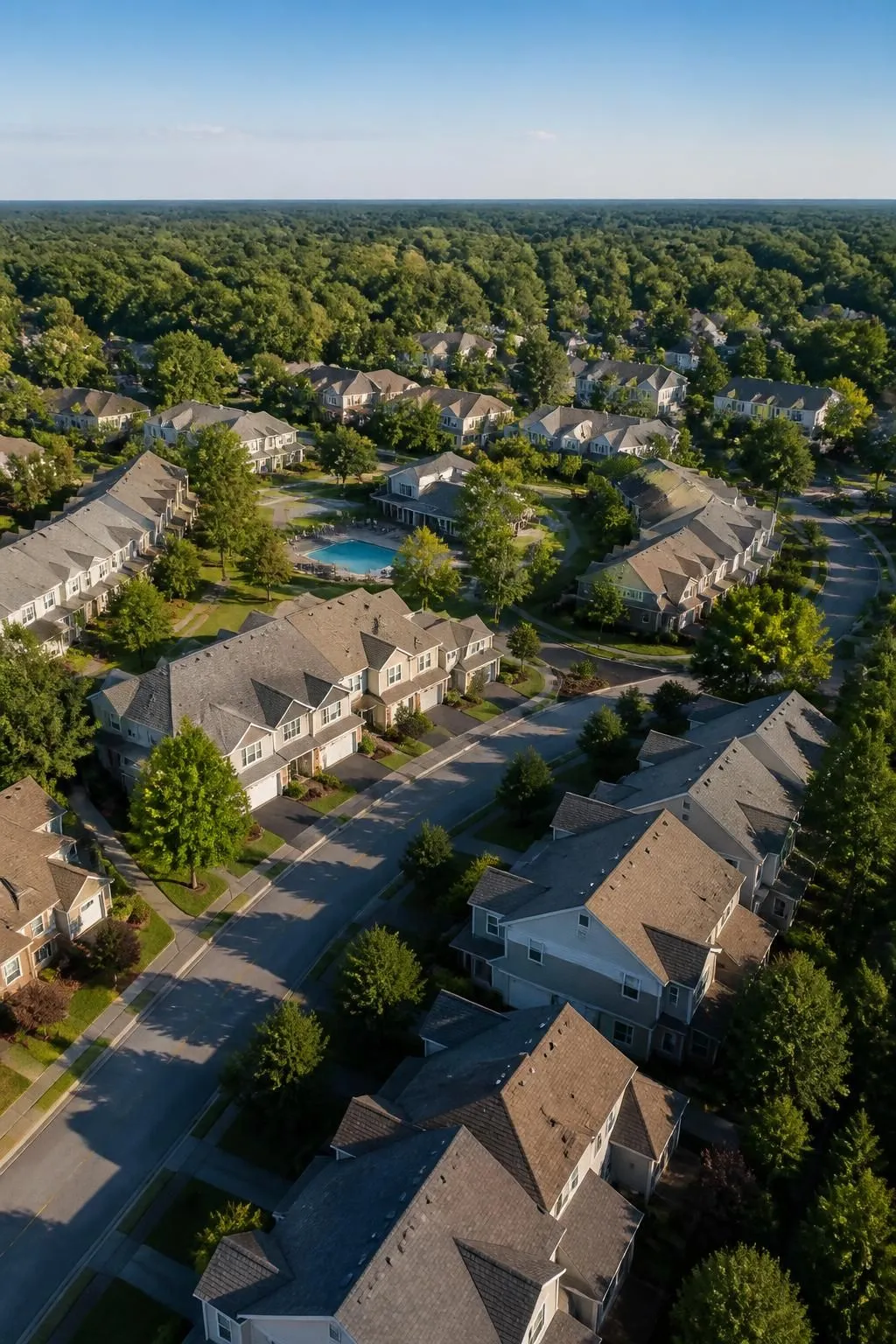
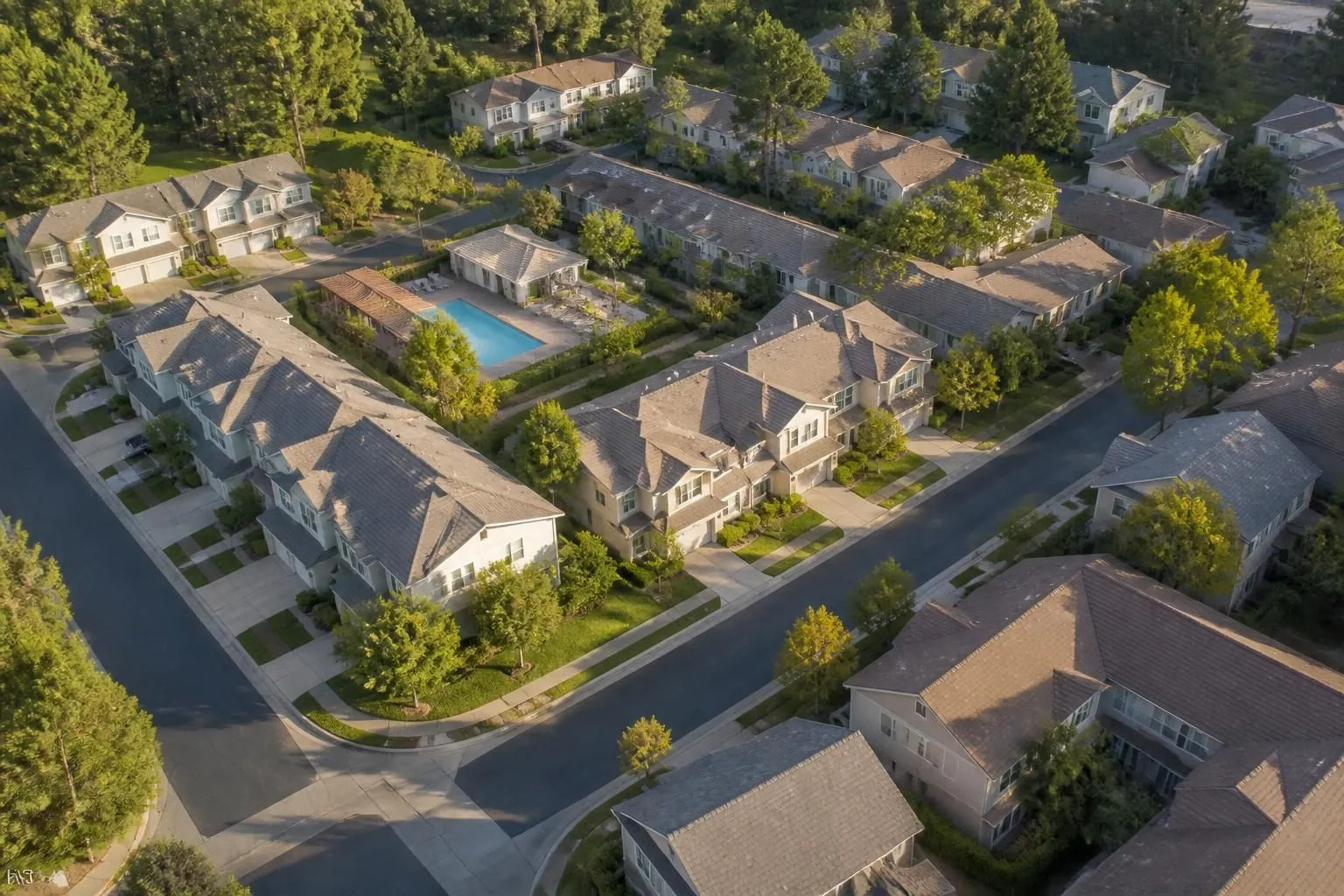
What the fee covers
Four reserve components, one photograph.
Roofs, the pool, the paving and the parking are all in this frame, and all of them are line items in a reserve study. The inventory is the work; the price follows from how much of it your property carries.
Get your proposalWhy we publish this
Almost nobody in this industry does. The standard practice is a contact form and a callback, which means a board that wants to compare three providers spends a week on the phone before it learns anything a website could have told it in ten seconds.
We think that is backwards, and we think it says something about a firm when its price is a secret. Publishing ours costs us the occasional deal where somebody else is cheaper. It also means the boards who call us already know roughly what this costs and are calling about the work rather than about the number.
There is a second reason, and it is closer to the point of the study itself. A reserve study exists to put real numbers in front of a board before the roof fails rather than after. A firm that will not tell you what its own work costs is asking you to trust it with exactly the exercise it declined to perform on itself. Laying the cost out first is the same discipline we are selling.
What to watch for in any quote
- Does the price include a site visit? This is the single largest cost difference between service levels, and the one most often left ambiguous.
- How many components will be inventoried? A study with 12 line items for a property that has 40 components is not a study of that property.
- Are costs local or national averages? Installed costs vary widely by region, and local hazard exposure such as hail or hurricane can make a component's pricing its own market. A study built on national averages will be wrong in both directions.
- What inflation assumption is used? A single flat CPI figure applied to every category is the easy approach and it is wrong: roofing, paving, and painting have moved at materially different rates for years.
- Are revisions included? Boards ask questions and request scenarios. Find out before, not after, whether that generates an invoice.
- Does the provider do remedial work or take referral fees? For a transition study this is a disqualifying conflict. For any study it is worth knowing.
Common questions
Why do quotes for the same property vary so much?
Usually because the quotes are not for the same work. One may be a Level I with a site visit and full component inventory while another is a desk update of whatever the previous provider produced. Ask every provider which service level they are quoting, whether the price includes a site visit, and how many components they expect to inventory. Once the quotes describe the same scope, the spread narrows considerably.
Why do you publish your pricing when almost nobody else does?
Because the alternative is asking a board to spend a week on the phone to learn what a website could say in ten seconds, and because a reserve study is itself an exercise in putting real numbers in front of people early. A firm that keeps its own price private is asking you to trust it with the work it would not do on itself. Our published ranges tell you where you are likely to land; your proposal replaces them with one fixed fee that does not move unless the scope does.
Is a cheaper study a worse study?
Not necessarily, but the cheapest quotes usually differ in scope rather than efficiency. Common places cost gets removed: no site visit, no photographs, a component list carried forward without verification, national average costs instead of local pricing, and flat CPI inflation instead of category-specific rates. None of those are illegitimate for the right engagement. They are a problem when a board thinks it is buying a full study and is not.
Do you charge extra for travel?
When a study includes a site visit, travel is quoted as a separate line item on the proposal so you can see it rather than having it buried in the fee. We cluster visits into trips, which is how we keep that line small. Your proposal states plainly what is included before you accept anything.
What does the price include?
The site visit and full photographic inventory, the component schedule with local installed costs, the thirty year funding analysis with all three funding scenarios, the complete written report, the First Findings card within 48 hours of the visit, and the RapidView dashboard for your board. One price, no per-scenario or per-revision charges.
How do we pay?
A deposit at acceptance and the balance at delivery. Bank transfer is presented first because it costs less than card processing and we would rather that difference stay with the association. Card is available. Public entity and federal clients on net-30 terms are accommodated; tell us at proposal time.
Update log
- Aug 20, 2026 Page published with the current price ladder.